 By Owen Palmer
Updated November 2026
If you want to use AirPods as hearing aid support for mild hearing difficulties, the models you choose matter. This list compares five AirPods-compatible products based on the features that count most: the built-in hearing aid feature, active noise cancellation, comfort for long wear, and how well each device handles speech in noisy places. Hearing aid features on AirPods are not a medical substitute, so read the selection criteria below before you buy.
Our top picks at a glance
- 1
 TOP CHOICEBest overallAppleLive Translation, Heart Rate Sensing, Hearing Aid Feature, BluetoView on Amazon
- 2TOP CHOICEBest for renewed buyersAmazon RenewedLive Translation, Heart Rate Sensing, Hearing Aid FeaturView on Amazon
- 3
 TOP CHOICEBest for seniors on a budgetAIR Bluetooth Rechargeable OTC Hearing Aids for SeniorsView on Amazon
- 4
 Best for speech clarityOTC Hearing Aids, Premium Sound Algorithm with VOCCLEAR 2.0, Bluetooth 5.3 and Smart AppView on Amazon
- 5
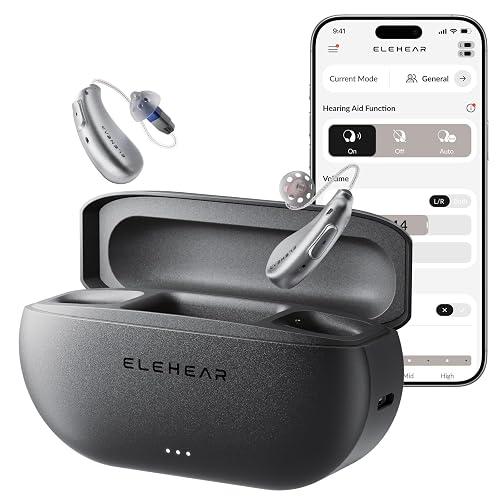 Best for long battery lifeAI Noise Cancellation, Bluetooth 5.3 and App Control, 100-Hour BatteryView on Amazon
Our Top Picks
| Product | Best for | Key feature |
|---|---|---|
| AppleLive Translation AirPods Pro 3 | Overall use | Hearing aid feature, ANC |
| Amazon Renewed Apple AirPods Pro (3rd Gen) | Lower-cost Apple option | Same hearing aid feature set |
| AIR Bluetooth Rechargeable OTC Hearing Aids | Seniors and first-time users | Smart AI noise cancellation |
| OTC Hearing Aids with VOCCLEAR 2.0 | Conversations in noise | Speech-focused sound algorithm |
| AI Noise Cancellation Bluetooth Hearing Aids | All-day wear | 100-hour battery claim |
AppleLive Translation, Heart Rate Sensing, Hearing Aid Feature, Bluetooth Headphones, Spatial Audio, USB-C Charging AirPods Pro 3 Wireless Earbuds with Active Noise Cancellation
AppleLive Translation, Heart Rate Sensing, Hearing Aid Feature, Bluetooth Headphones, Spatial Audio, USB-C Charging AirPods Pro 3 Wireless Earbuds with Active Noise Cancellation Can Bone Conduction Headphones Be Used as Hearing Aids? What to Know (2026) goes further into this.
Best for: Overall use with the Apple ecosystem
This suits someone who already uses an iPhone and wants the built-in hearing aid feature alongside strong noise cancellation for everyday listening.
Pros
- Built-in hearing aid feature on supported Apple devices
- Active noise cancellation for quieter listening
Cons
- Works best only with compatible iPhones
Amazon Renewed Apple AirPods Pro (3nd Generation) with Live Translation and Hearing Aid Feature
Amazon RenewedLive Translation, Heart Rate Sensing, Hearing Aid Feature, Bluetooth Headphones, Spatial Audio, USB-C Charging Apple AirPods Pro (3nd Generation) (Renewed)
Best for: Buyers who want the Apple feature set through a renewed listing
This fits shoppers who want the same hearing aid feature as the new model and are comfortable with a certified renewed unit.
Pros
- Same hearing aid and spatial audio feature set as new units
- Typically a lower-cost route into Apple’s ecosystem
Cons
- Condition and cosmetic wear can vary between listings
AIR Bluetooth Rechargeable OTC Hearing Aids for Seniors
Bluetooth 5.4, Smart AI Noise Cancellation, Discreet In‑Ear Design, Smart App Control with Portable Charging Case AIR Bluetooth Rechargeable OTC Hearing Aids for Seniors
Best for: Seniors and first-time hearing aid users
This is a dedicated over-the-counter hearing aid rather than earbuds, aimed at people who want amplification with app-based control.
Pros
- Discreet in-ear design with portable charging case
- Smart app control for adjusting sound
Cons
- Fit and comfort vary, so check the return policy
OTC Hearing Aids, Premium Sound Algorithm with VOCCLEAR 2.0, Bluetooth 5.3 and Smart App
OTC Hearing Aids, Premium Sound Algorithm with VOCCLEAR 2.0, Bluetooth 5.3 & Smart App, Fast Charge, Real-Time AI Translation Beyond Pro Bluetooth Hearing Aids for Seniors, 30% Clearer Speech
Best for: Following conversations in noisy rooms
This suits people who mainly struggle with speech in restaurants, meetings or group settings and want a speech-focused algorithm.
Pros
- Speech-focused sound processing for conversations
- Bluetooth 5.3 with a companion smart app
Cons
- Manufacturer clarity claims are not independently verified
AI Noise Cancellation, Bluetooth 5.3 and App Control, 100-Hour Battery Bluetooth Rechargeable Hearing Aids
AI Noise Cancellation, Bluetooth 5.3 and App Control, 100-Hour Battery, Remote Audiologist Support, Upgraded Receiver Beyond OTC Bluetooth Rechargeable Hearing Aids, Superior Sound
Best for: All-day wear with minimal recharging
This fits users who want to wear their device through long days and value the advertised battery runtime.
Pros
- Manufacturer specifies up to 100 hours of battery life
- Remote audiologist support is listed as a feature
Cons
- Battery figures depend on volume and settings
Buying Guide
Check the hearing aid feature and device compatibility
Apple’s built-in hearing aid feature works only on supported AirPods models paired with compatible iPhones. Confirm both before you buy, since dedicated hearing aids work with any phone.
Consider noise cancellation versus amplification
Noise cancellation reduces background sound, while amplification boosts speech. Owners often report that they need both for restaurants, but they are different functions.
Look at fit and comfort for long wear
Ear tip size changes how sound reaches the ear canal. Try a few tip sizes and wear the device for a full day before relying on it.
FAQ
Can AirPods really work as a hearing aid?
AirPods with the Hearing Aid feature can amplify sound and adjust audio to help people with mild to moderate hearing loss hear conversations more clearly. They are not a medical device replacement, so a hearing test and professional guidance are still the best first step. Think of them as a convenient support tool rather than a full clinical solution.
Do I need a hearing test before using AirPods as a hearing aid?
Apple’s Hearing Test feature can give you a quick check of your hearing profile, which helps tune the Hearing Aid feature for your ears. If you have sudden hearing loss, ear pain, discharge, or a noticeable change in hearing, see an audiologist or doctor rather than relying on earbuds. A formal evaluation is worth it for any persistent difficulty.
Are AirPods Pro better than dedicated OTC hearing aids?
AirPods Pro offer strong noise cancellation, comfortable everyday wear, and a familiar ecosystem, which suits people who already use Apple devices. Dedicated OTC hearing aids are designed specifically for amplification and may offer more adjustment options and longer battery life. The better choice depends on how severe your hearing difficulty is and how much you value amplification versus general audio features.
Will noise cancellation interfere with hearing support?
Noise cancellation reduces background sound, which can make speech easier to follow in loud environments. However, it can also block ambient sounds you may want to hear, so some users switch between modes depending on the setting. Testing different modes in real situations helps you find the balance that works best.
Are renewed AirPods a safe option?
Renewed devices are refurbished and typically come with a warranty, but their condition and battery health can vary by seller. Check the seller’s return policy and warranty terms before buying. Confirm that the model supports the Hearing Aid feature, since not all AirPods generations include it.
How long do the batteries last on these devices?
Battery life varies by model, usage, and whether noise cancellation or amplification is active. Dedicated rechargeable hearing aids list long battery figures, while AirPods rely on their charging case for extended use. Check current manufacturer specifications for the exact runtime of the model you are considering.
Conclusion
If you want a versatile earbud that handles calls, music, and light hearing support within the Apple ecosystem, an AirPods Pro model with the Hearing Aid feature is the most natural pick. If your hearing difficulty is more significant or you want amplification as the primary function, a dedicated Bluetooth rechargeable OTC hearing aid is likely a better fit.
Whichever option you choose, consider a hearing evaluation to confirm the right level of support, and prioritize comfort for the hours you plan to wear them each day.
Related reading
- How to Use AirPods as Hearing Aid: 5 Steps for Mild Hearing Loss
- Wireless Charging Case Airpods: How to Choose and Use One (Step-by-Step)
- What Is Adaptive Mode on AirPods? How It Works and When to Use It
About Owen Palmer
Owen Palmer is part of our editorial team and reviews and edits our brand headphones & noise cancelling guides, checking product details against manufacturer specifications and owner feedback.