Quick answer
Our overall pick for the best headphones for kids is the iClever HS19, a wired model with a strict 85 dBA volume limit and a share port. For wireless freedom, the Acer Kids Bluetooth Headphones offer long battery life, while the Candy Bila and EarFun K1 are excellent durable wired options.
Choosing the best headphones for kids is different from shopping for adults. The priority shifts from pure audio performance to safety, durability, and comfort for smaller heads. Key features to look for include volume-limiting technology to protect young hearing, sturdy construction that can survive a backpack, and a comfortable, adjustable fit.
We compared manufacturer listings for several widely available kids’ headphones available on Amazon. Our picks focus on models that explicitly state safe volume limits, include useful features like microphones for online learning, and are designed to withstand daily use.
Our picks at a glance

Pros
- Volume limited to a safe 85 dBA
- Includes a share port for easy audio sharing
- Built-in microphone for calls and online learning
- Foldable design for easy storage and travel
Cons
- Wired connection requires a 3.5mm jack
- The listing does not mention specific durability tests or certifications
Pros
- Long 60-hour battery life with USB-C charging
- Wireless Bluetooth 6.0 connectivity
- Reinforced hinge and foldable design for durability
- CPSIA certified and BPA-free
Cons
- Wireless only, though a cable is included for a wired connection
- The listing does not mention active noise cancellation

Pros
- Tear-resistant nylon cord for added durability
- Dual volume limiter (85/94 dB)
- Foldable and adjustable design
- Includes in-line remote and microphone
Cons
- Wired connection only
- The listing does not mention specific driver size or audio certifications

Pros
- Made from recycled and sustainable materials
- Long 18-month warranty
- Nylon-braided, tangle-free cable
- Includes a share jack and volume limiter
Cons
- Wired connection only
- The listing does not mention specific comfort features like memory foam

Pros
- Very long 85-hour battery life
- USB-C fast charging
- Includes a detachable cable for wired use
- 24-month warranty
Cons
- The listing does not mention specific safety certifications like CPSIA
- Volume limit starts at 74 dBA, which may be too quiet for some older children

Pros
- Passive noise cancellation from over-ear design
- Dual volume limiter (85/94 dB)
- Thickened nylon-braided cable
- Built-in HD microphone
Cons
- Wired connection only
- Enclosure is listed as plastic
How we chose
To find the best headphones for kids, we compared manufacturer listings and specifications on Amazon as of October 2026. We did not test these products hands-on. Our selections are based on comparing key criteria from the product data: volume-limiting technology, durability claims, wired or wireless connectivity, battery life for wireless models, and included features like microphones and share ports.
Best Headphones for Kids: our picks in detail
1. Best overall: iClever HS19 Kids Headphones
The iClever HS19 are wired over-ear headphones designed for children. They feature a volume limiter set to 85 dBA for hearing protection. The headphones have a built-in 40mm driver for stereo sound and include an in-line microphone for calls and online courses.
A key feature is the share port, which allows a second pair of headphones to be plugged in for audio sharing without a splitter. The listing notes an over-ear design with ultra-soft earmuffs for comfort and a foldable design for portability. It comes with a 12-month replacement warranty.
Best for: Parents seeking a reliable, wired headphone with a strict volume limit and a handy audio share port.
Pros
- Volume limited to a safe 85 dBA
- Includes a share port for easy audio sharing
- Built-in microphone for calls and online learning
- Foldable design for easy storage and travel
Cons
- Wired connection requires a 3.5mm jack
- The listing does not mention specific durability tests or certifications
2. Best for long battery life: Acer Kids Bluetooth Headphones
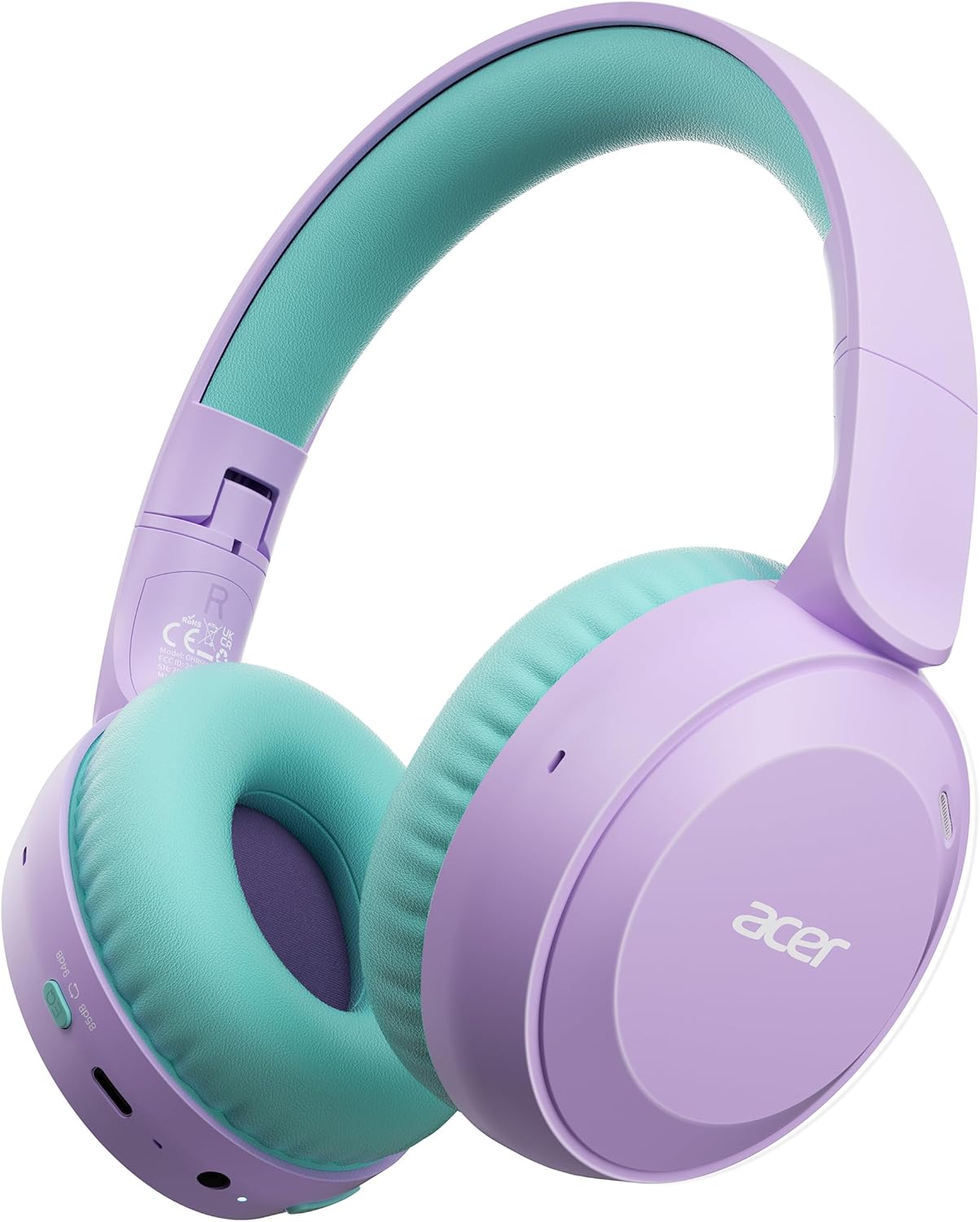
The Acer Kids Bluetooth Headphones are wireless over-ear models. They feature volume-limiting technology with two settings: 85 dB and 94 dB. The listing states they meet US market regulations and are CPSIA certified and BPA-free.
These headphones use Bluetooth 6.0 and have a built-in microphone. A key spec is the 60-hour battery life, with a USB-C port for charging. They are foldable, have an adjustable headband, and weigh 6.63 ounces. The listing mentions a reinforced hinge for durability and includes a 1-year warranty.
Best for: Kids who need cord-free listening for long trips or daily use without frequent charging.
Pros
- Long 60-hour battery life with USB-C charging
- Wireless Bluetooth 6.0 connectivity
- Reinforced hinge and foldable design for durability
- CPSIA certified and BPA-free
Cons
- Wireless only, though a cable is included for a wired connection
- The listing does not mention active noise cancellation
3. Best for durability: Candy Bila Wired Kids Headphones
The Candy Bila BH03 are wired over-ear headphones for kids. They feature a dual volume limiter set at 85 dB and 94 dB. The headphones have an in-line remote with one-button control for play/pause, answering calls, and track switching.
The listing highlights a tear-resistant nylon cord designed to be child-proof. The headband is adjustable, and the headphones are foldable for portability. They include a built-in microphone and are compatible with devices that have a 3.5mm audio jack. A 1-year warranty is provided.
Best for: Active kids who need a headphone with a cable built to resist pulling and yanking.
Pros
- Tear-resistant nylon cord for added durability
- Dual volume limiter (85/94 dB)
- Foldable and adjustable design
- Includes in-line remote and microphone
Cons
- Wired connection only
- The listing does not mention specific driver size or audio certifications
4. Best for eco-conscious families: EarFun K1 Wired Kids Headphones
The EarFun K1 are wired over-ear headphones for children. The listing states they are made of recycled and sustainable material and meet CPC and CPSIA standards. They feature a volume limiter at 85 dB/94 dB.
These headphones have a built-in 40mm driver for stereo sound and a share jack for audio sharing. The cable is a nylon-braided cord designed to be tangle-free. They include an in-line control for calls and music, a built-in microphone, and a foldable design. EarFun provides an 18-month warranty.
Best for: Families looking for a kids’ headphone made with sustainable materials and a strong warranty.
Pros
- Made from recycled and sustainable materials
- Long 18-month warranty
- Nylon-braided, tangle-free cable
- Includes a share jack and volume limiter
Cons
- Wired connection only
- The listing does not mention specific comfort features like memory foam
5. Best for extended playtime: iClever BTH12 Kids Bluetooth Headphones
The iClever BTH12 are wireless over-ear headphones for kids. They offer a volume limiter with two settings: 74 dBA and 85 dBA. A key feature is the 85-hour battery life, with USB-C fast charging that provides 7 hours of play from a 10-minute charge.
They use Bluetooth 5.2 and include a built-in microphone. The listing mentions reinforced material for durability against drops and twists. The headphones come with a detachable 3.5mm audio cable for a wired option and have a 24-month warranty.
Best for: Kids who use headphones frequently and need an exceptionally long battery life between charges.
Pros
- Very long 85-hour battery life
- USB-C fast charging
- Includes a detachable cable for wired use
- 24-month warranty
Cons
- The listing does not mention specific safety certifications like CPSIA
- Volume limit starts at 74 dBA, which may be too quiet for some older children
6. Best for passive noise isolation: Aechorhy Over Ear Kids Headphones
The Aechorhy YY-01 are wired over-ear headphones for kids. They feature two safe volume modes: 85 dB and 94 dB. The listing specifies they have 40mm dynamic drivers for stereo sound.
These headphones are noted for passive noise cancellation due to their over-ear design. They have an adjustable headband, plush earmuffs, and a thickened nylon-braided cable. A built-in high-definition microphone is included for calls. The enclosure is made of plastic, and a 1-year warranty is offered.
Best for: Children who need to block out ambient noise in busy environments like homes or cars.
Pros
- Passive noise cancellation from over-ear design
- Dual volume limiter (85/94 dB)
- Thickened nylon-braided cable
- Built-in HD microphone
Cons
- Wired connection only
- Enclosure is listed as plastic
Best headphones for kids at a glance
| Model | Connection | Volume Limit | Battery Life | Key Feature |
|---|---|---|---|---|
| iClever HS19 (Best overall) | Wired | 85 dBA | Not applicable | Share port for audio sharing |
| Acer Kids Bluetooth | Wireless (Bluetooth 6.0) | 85/94 dB | 60 hours | Reinforced hinge, CPSIA certified |
| Candy Bila Wired | Wired | 85/94 dB | Not applicable | Tear-resistant nylon cord |
| EarFun K1 | Wired | 85/94 dB | Not applicable | Made from recycled materials |
| iClever BTH12 | Wireless (Bluetooth 5.2) | 74/85 dBA | 85 hours | USB-C fast charging |
| Aechorhy Over Ear | Wired | 85/94 dB | Not applicable | Passive noise cancellation |
How to choose the best headphones for kids
Selecting headphones for a child involves balancing safety, practicality, and their intended use. The most critical feature is volume limiting. Prolonged exposure to loud sounds can damage hearing, especially in children. Look for headphones that explicitly state a maximum volume, often 85 decibels (dB), which is a commonly recommended safe level. Some models offer a second, slightly higher limit for occasional use. For more on hearing safety, see the World Health Organization’s fact sheet on deafness and hearing loss.
Durability is next. Kids are not always gentle. Look for listings that mention reinforced hinges, tangle-resistant or braided cables, and foldable designs that can survive being stuffed into a backpack. Comfort is also key for long listening sessions during travel or study; adjustable headbands and soft, over-ear cushions are important features.
Finally, consider connectivity. Wired headphones are simple, never need charging, and often cost less, but the cord can be a snag hazard. Wireless Bluetooth headphones offer freedom of movement and are great for travel, but you must manage battery life. Many wireless kids’ models also include a cable for a wired backup. Think about whether your child needs a microphone for online classes or a share port to listen with a friend.
What to look for
- Volume Limiting: Ensure the product listing specifies a safe maximum volume, such as 85 dB.
- Durability: Look for mentions of reinforced construction, braided cables, and foldable designs.
- Comfort & Fit: Adjustable headbands and soft, over-ear cushions are essential for a good seal and long-term wear.
- Connectivity: Decide between simple wired models or wireless Bluetooth for cord-free use, checking battery life if wireless.
- Extra Features: A built-in microphone is useful for online learning, and a share port can be a fun bonus.
FAQ
What is a safe volume for kids’ headphones?
Many health organizations recommend limiting exposure to sounds at or below 85 decibels (dB) to prevent noise-induced hearing loss. The best headphones for kids will have a built-in limiter that caps the maximum volume at this level. Some models offer a second, slightly higher setting, but the 85 dB limit is the key safety feature to look for.
Are wired or wireless headphones better for kids?
Both have advantages. Wired headphones are simple, don’t require charging, and are often more affordable. Wireless Bluetooth headphones eliminate cords that can get tangled or pulled, which can be safer and more convenient for active kids or travel. The best choice depends on your child’s use case and your willingness to manage battery charging.
How can I tell if kids’ headphones are durable?
Check the product listing for specific claims. Look for keywords like “reinforced hinge,” “tear-resistant cord,” “nylon-braided cable,” “foldable design,” or mentions of passing durability tests. Some listings also reference safety certifications like CPSIA, which can indicate stricter manufacturing standards.
Why do some kids’ headphones have a share port?
A share port, or audio jack, allows a second pair of standard headphones to be plugged into the first pair. This lets two children listen to the same audio source from a single device (like a tablet) without needing a separate audio splitter cable. It’s a convenient feature for siblings, playdates, or classroom use.
References
- Amazon product listings and manufacturer specifications (accessed October 2026)
- World Health Organization. Deafness and hearing loss.
- U.S. Consumer Product Safety Commission (CPSC). Recalls.